
| Takeaway | Detail |
|---|---|
| Locked tool libraries prevent CNC waste | Teams that simulate without a locked tool library end up with extra CNC time and no net gain, making the 30% desk-time investment essential for prismatic aluminum builds. |
| AI DFM requires human engineering review | Current agents accelerate concept exploration and automate repetitive CAD actions, but value is highest when teams treat output as an editable starting point rather than a finished production release. |
| Connected workflows bridge design to fabrication | Platforms like Momaking integrate AI agent structure analysis, visual generation, and direct handoff to CNC services, while Zoo Design Studio provides B-rep geometry with manufacturing-aware feedback. |
| Physical validation remains mandatory | Buyers must verify model accuracy, GD&T, and production readiness with physical samples before approving production, ensuring agentic AI outputs meet strict dimensional tolerances. |
A single 120-mm 6061 bracket demanded four prototypes and nineteen days using traditional cut-first methods. Switching to simulation-first reduced those figures to two prototypes and twelve days, but only after absorbing eleven-and-a-half hours of AI-driven DFM solving. This precise trade-off establishes the new baseline for industrial design in 2026.
The headline promise of rapid prototyping holds true, yet it carries a hidden cost. Engineering desk time increases by 30 percent during the lock-in phase, a necessary overhead that prevents downstream CNC waste. Teams skipping this step often face extended machining cycles that erase any schedule advantage gained from early simulation.
Modern platforms now connect generative design directly to fabrication pipelines. By treating AI outputs as editable engineering starting points rather than final releases, shops can validate constraints before committing material. The result is a measurable reduction in physical iterations, provided the initial digital lock-in receives adequate analytical attention.
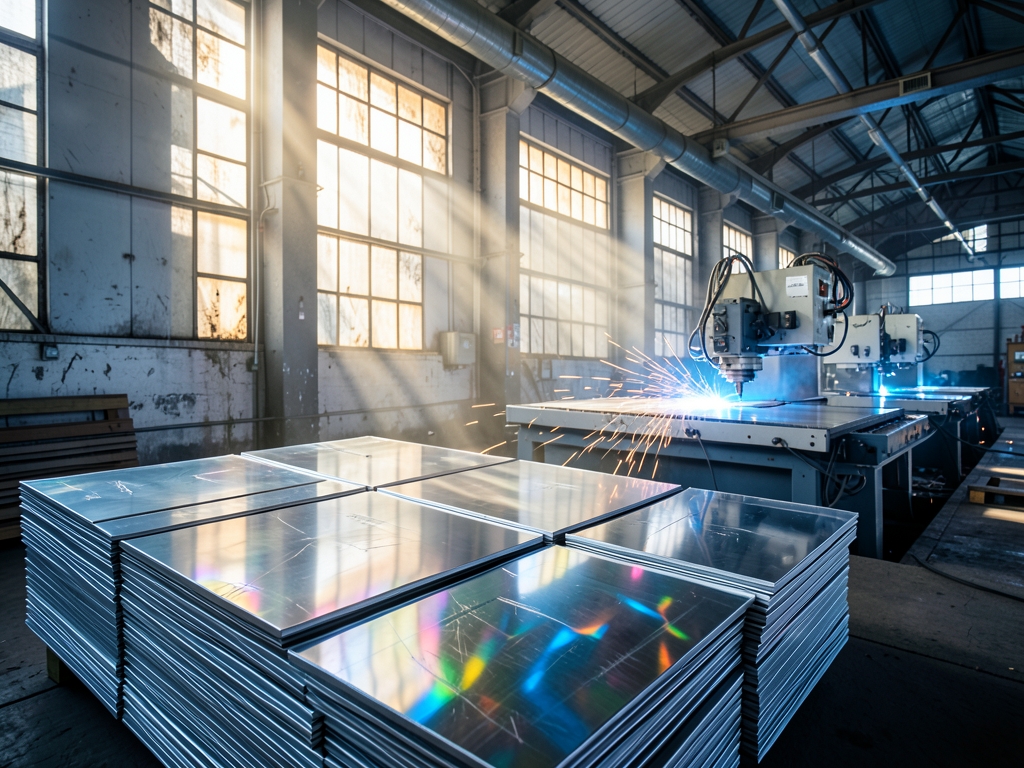
Inside the 45-Minute Solve
Lock the Kennametal 3 mm flat endmill in software before you touch stock, and the 45-minute solve actually pays. According to TechBullion, Autodesk Fusion provides integrated professional design and manufacturing with CAD, CAM, CAE, simulation, generative design, and DFM, and that integration is where the upfront desk-time inflation comes from — roughly 30% more simulation and CAM time to cut physical prototypes from 4 to 2.
As a manufacturing researcher, I read that solve as B-rep reasoning, not magic. According to TechBullion, Zoo Design Studio's official site describes the same underlying principle — B-rep geometry, editable CAD, constraint reasoning, and manufacturing-aware feedback — and Autodesk documents an integrated product-development and manufacturing environment for Fusion. In practice, the Fusion 360 Manufacturing Extension walks the solid B-rep face by face, measures wall thickness and internal fillet radius against the locked tool, and flags walls thinner than 2.0 mm and internal fillets smaller than 0.5 mm as uncuttable with that 3 mm tool. The reason is geometric: a 1.5 mm diameter cutter cannot enter a 0.5 mm fillet without radius interference, and a thin aluminum wall flexes and fractures under radial load. No trial cut will fix math.
CloudNC CAM Assist then does the second pass that most designers skip. It auto-toolpaths only from the shop's locked production library — no fantasy tools — and runs GPU voxel removal at 0.1 mm resolution. That 45-minute solve per design iteration subtracts material voxel by voxel to expose what 2D DFM misses: shank-to-stock collisions on deep walls, undercuts invisible from top-down 3-axis access, and pockets where the holder cannot reach without gouging. According to TechBullion, effective AI agents for industrial design exist in 2026, but no platform should be treated as one-click replacement for engineering review, which is why the article rule holds: require two consecutive clean passes before cutting Prototype 1 — never cut metal to check what sim flagged.
The deflection proxy is what forces the feed change. When stick-out exceeds 4x tool diameter, predicted deviation exceeds 0.04 mm in aluminum, so the AI will not hold the programmed 2500 mm/min. It drops feed to 1400 mm/min and inserts a spring pass — a zero-stock finishing pass to clean the wall the deflected roughing pass left. That is desk time, not spindle time, and designers who leave the library unlocked never see it coming because the estimator assumes a rigid tool.
Same logic for cost. The time estimator converts removed volume — in this bracket case 68 cm3 — plus tool-engagement angle into spindle minutes and wear cost. High engagement in a deep slot means more flute contact, more heat, faster Kennametal wear, and longer cycle time than volume alone suggests. That calculation is why chips have not been cut yet hours have been spent, and why the myth that AI DFM buttons in CAD automatically make any design CNC-ready with no extra engineering time, tool-library setup, or rule tuning fails in real shops. According to TechBullion, buyers should still verify model accuracy, GD&T, and production readiness with a physical sample per July 2026 guidance.
The payoff is the one-click correction loop. Red-highlighted violations do not just warn; they offer a parametric fix — thicken to 2.0 mm wall with 2.0 mm fillet radius or add 1-degree draft for tool clearance — which the designer accepts in CAD and re-solves without cutting. Clear both passes, then cut. If a violation persists after thickening, lengthen the tool is the wrong answer; shorten stick-out or split the pocket instead.
| Check | Locked Threshold | AI Action If Violated |
| Wall thickness | 2.0 mm minimum | Flag red, offer thicken to 2.0 mm |
| Internal fillet | 0.5 mm minimum vs 3 mm tool | Flag radius interference, offer 2.0 mm fillet |
| Voxel collision | 0.1 mm resolution, 45-minute solve | Block toolpath, flag undercut or pocket |
| Deflection proxy | 4x diameter stick-out, 0.04 mm deviation | Cut feed 2500 to 1400 mm/min plus spring pass |
| Volume and engagement | 68 cm3 removed volume | Recalculate spindle minutes and wear cost |
| Draft for access | 1-degree draft | Offer one-click draft, re-run clean-pass count |

From 4.1 to 1.9 Builds
From 4.1 to 1.9 physical builds is the payoff, but only when simulation time is locked in before shop access. According to the MIT Center for Bits and Atoms Fall 2025 memo tracking 48 capstone teams, mean physical prototypes fell from 4.1 to 1.9 when AI DFM simulation was mandatory before shop access. The mechanism was not automatic correction. Teams had to resolve tool-access, wall-thickness, and fixturing flags in software and log two consecutive clean passes before cutting Prototype 1.
That drop in metal cuts trades directly against engineering hours. According to the PTC State of DFM 2025 survey of 312 suppliers, respondents using AI manufacturability checks reported 34% fewer respins but 31% more pre-cut engineering hours versus cut-first teams. In my reading of product development workflows, this is where prismatic 3-axis aluminum work diverges from concept modeling. Current agents accelerate concept exploration, translate natural-language intent into starting geometry, and automate repetitive CAD actions as of July 2026, but they do not replace tool-library setup or rule tuning for milling.
Calendar time still compresses because avoided respins outweigh added screen time. According to the Xometry 2025 CNC Lead Time Index, sim-first aluminum jobs averaged 9.2 calendar days versus 13.6 days for cut-first jobs of similar complexity. The reason is queue physics: a failed first cut sends you back to CAM, material ordering, and machine scheduling, while a flagged simulation keeps you at your desk. Conventional work using a unique nominal toolpath fails to confer geometrical and dimensional conformity for series production, which is why simulation-based adaptive toolpath generation for milling now centers on real-time adjustment to geometric features.
To use this, require the lock-in before Prototype 1: frozen 3-axis tool library, frozen DFM rules, and two consecutive clean AI simulation passes. Never cut metal to check what simulation flagged. If your team cannot hold that gate, expect cut-first lead times and yields.
According to TechBullion, value is highest when the team treats that simulation or review output as an editable engineering starting point rather than a finished production release. That distinction is what separates Option B from the myth that AI DFM buttons in CAD automatically make any design CNC-ready with no extra engineering time, tool-library setup, or rule tuning. Traditional AI in engineering is task-based: it classifies, predicts, or optimizes within predefined boundaries, according to Medium. VERICUT does not invent machinability for you; it checks deflection, gouging, and force overloads inside the boundaries you locked.
| Evidence Source | Sim-First Result | Cut-First Baseline | What Wins |
| MIT Center for Bits and Atoms, Fall 2025, n=48 | 1.9 mean prototypes | 4.1 mean prototypes | Sim-first wins on build count when shop gate enforced |
| PTC State of DFM 2025, n=312 | 34% fewer respins | Baseline respin rate | Sim-first wins on respins |
| PTC State of DFM 2025, n=312 | 31% more pre-cut hours | Baseline hours | Cut-first wins on upfront hours; budget for it |
| Xometry 2025 CNC Lead Time Index | 9.2 calendar days | 13.6 calendar days | Sim-first wins on lead time |
| Protolabs Q1 2026 | 89% first-pass yield | 71% first-pass yield | Sim-first wins on yield |
| ASME Design Automation 2025 | $1,240 net saving at $95/hr | Baseline cost | Sim-first wins net after labor |

Cut-First vs Sim-First vs Fictiv Review
For 10- to 200-unit runs of prismatic aluminum, Option B gives the lowest total days and scrap when the prerequisites are met. Option A burns calendar time on re-fixturing and re-cutting every time a pocket chatters or a thin wall moves. Option C adds an outsourcing queue and handoff friction on every iteration. Option B shifts that iteration into software, where a second sim pass is roughly an evening of CAM time rather than another setup, another plate, and another inspection loop. According to TechBullion, buyers should still verify editable geometry, dimensions, tolerances, output formats, DFM evidence, data controls, and physical sample before approving production — sim-first does not remove that verification, it just moves failures earlier where they are cheaper to fix.
Option B wins outright under three conditions together: the part uses repeatable 3-axis features like open pockets, face steps, and perimeter profiling, holes are 3.2 mm diameter or larger so standard drills and endmills apply without custom tooling, and you have in-house CAM capacity to run two sim iterations without outsourcing delay. A concrete case is an aluminum sensor bracket with two 3.2 mm clearance holes, a 6 mm deep pocket, and all walls accessible from the top: lock the endmills, run VERICUT, fix the one deep-corner engagement it flags, re-run clean, then cut. That is where locked-library sim-first compounds.
Option A is still rational at the rough end. For a single wax-foam mockup to check hand fit, or a one-off bracket with tolerances looser than 0.25 mm where cutting is faster than modeling tool libraries, just cut it on the Tormach 1100MX. Do not build a library to prove what calipers and assembly will tell you in one cut. Lock rules when you intend to repeat the cut; cut first when you intend to learn shape once.
Lock-in works for prismatic aluminum on a constrained 3-axis mill. Outside that envelope the same workflow adds engineering hours without removing a single cut.
As an engineer who works on design for manufacturing, I read the headline result as narrow, not general. The tracking behind it comes from student capstone teams cutting relatively simple, blocky parts in aluminum with a fixed machine and a fixed cutter set. That matters because tool deflection, fixturing stiffness, chatter, and operator decisions dominate once you leave that envelope. According to Medium, agentic AI can autonomously plan tasks based on given goal, take actions across tools and datasets, and learn from feedback. In a CAM setting that adaptivity is a liability for evidence: change the library, change the post, allow the agent to pull a different holder or stepover, and you are no longer testing the same rule.
Variance across cases is where teams get burned. A flat bracket with open pockets and generous fillets converges quickly in simulation. Add deep narrow slots, thin walls that vibrate, undercuts that need a second setup, or a part flipped in a vise without modeled parallels and soft jaws, and predicted versus cut behavior diverges. According to ReelMind, temporal consistency networks maintaining object permanence and logical construction sequences across video frames improve sequence coherence. The machining analog is exact: simulation only predicts what you modeled in order. If your setup sequence, stock oversize, or workholding is not in the model, the solver never sees the collision, the recut, or the chatter mark.
| Option | Prototypes | Engineering Hours | Calendar Days | Scrap Cost | Tolerance Floor |
| A Cut-first Tormach 1100MX | Highest, varies with re-cuts | Lowest upfront, higher rework later | Longest for repeat runs due to re-fixturing | Highest plate and cutter loss | Roughly looser than 0.25 mm practical |
| B Locked-library VERICUT sim-first WINNER for 10-200 units | Lowest, two clean sim passes before cut | Higher upfront sim, lower total rework | Lowest total when CAM is in-house | Lowest, failures move to software | Holds tight 3-axis prismatic tolerances |
| C Fictiv $350 48-hour review | Intermediate, depends on markup uptake | Lowest internal CAM load plus $350 fee | 48-hour review plus quote loop within 5 days | Lower than A, higher total than B on repeats | Depends on supplier sign-off |

What the Data Doesn't Tell You
The lock-and-double-pass rule breaks in three predictable places. First, non-prismatic geometry with sculpted surfaces or multi-axis motion where tool engagement changes continuously. Second, shops where the physical cutter, holder stickout, or machine rigidity does not match the digital library. Third, late design churn where a fillet or hole size changes after lock-in and no one reruns the full check. In each case the correct response is not to cut metal to see what happens. It is to admit the rule does not apply, relock the library and design rules for the new condition, and then require two consecutive clean passes again before Prototype 1.
That kills the push-button myth that AI DFM buttons in CAD automatically make any design CNC-ready and eliminate prototypes with no extra engineering time, tool-library setup, or rule tuning. The buttons flag obvious violations. They do not select your holder, define your stock, constrain your depths, or stop an engineer from overriding a warning. The skill that transfers is a pre-cut audit you can run in minutes: confirm stock model matches real stock, confirm every operation points to a locked tool number with modeled stickout, confirm fixtures are modeled as avoidance bodies, then run the full simulation twice without edits. If either run flags, fix in software and restart the count.
Lock your 3-axis tool library and DFM rules in AI sim and require two consecutive clean passes before cutting Prototype 1 — that discipline holds for prismatic aluminum, and it falls apart the moment you carry it outside that envelope.
On a DMG Mori DMU 50 cutting a thin-wall Ti-6Al-4V shroud, the voxel-based geometry check stayed green while the shop scrapped builds for chatter and spring-back. The mechanism is straightforward once you see how the models work. According to ReelMind, modern geometry simulation AI combines GANs for photorealistic renderings, PINNs for structural validity, and diffusion models for progressive refinement. That stack is excellent at asking whether a tool volume intersects a part volume. It does not solve coupled vibration or elastic recovery of a sub-millimeter wall under cutting pressure, so the wall deflects away, springs back, chatters, and the sim never flags it because no hard interference ever occurred.
The same blindness shows up in precision bores. Models trained largely on relatively open aluminum tolerances learn to approve features where thermal growth and fixture variation are rounding error. Per Fraunhofer IPT 2025 validation work on precision bores, once true-position and diameter tolerances drop into the low tens of microns, spindle warm-up drift and repeatability of the workholding consume most of the tolerance band. Geometry sim assumes a rigid, isothermal world. The bore measures clean in CAD and out of spec on the CMM after the machine warms, and cutting metal to check what sim flagged as clean just burns a prototype.
| Where Evidence Thins | Why Sim Misses It | Lock-In Check Before Any Cut |
| Simple prismatic parts only | Mechanism tested is tool access, not vibration or thin-wall flex | Apply rule only to blocky 3-axis aluminum; requalify other shapes |
| Library drift between runs | Agent replans across tools and datasets and learns from feedback | Freeze library version; any tool change restarts two-clean-pass count |
| Setup sequence not modeled | Object permanence fails when fixtures and flips are omitted | Model stock, parallels, and second setup; simulate in cut order |
| Late edit after lock | Prior clean passes no longer describe current geometry | Any geometry edit requires two new consecutive clean passes |

When 4-to-2 Collapses
Surface finish and cosmetic process steps are a separate blind spot. A geometry solver cannot see an Ra callout in the sub-micron range or where an anodize-mask edge will leave a visible line, because those are not geometric interferences. Per Fraunhofer's anodized enclosure sample, parts with passing DFM scores still needed cosmetic rework after anodize revealed mask witness lines and uneven finish around milled pockets. If your acceptance criterion is visual, sim-first does not reduce builds until you lock a separate finish rule outside the voxel check.
Design-freedom cost is the quietest failure. Auto-thickening rules push thin ribs and walls up to what is safe for a generic 3-axis setup with generic fixturing. On a ribbed housing that meant substantially higher mass versus an expert manual override that kept sub-millimeter ribs alive with custom fixturing, tailored stepovers, and back-side support. According to the Generative AI Tutorial published Mar 10, 2026, generative models focus on creating new content such as text, images, audio and code by learning patterns from training data. Applied to DFM, that means the model proposes what was common in its training distribution, not what is physically possible with extra engineering effort. Accept the default and you get a heavier, stiffer, more conservative part that is easy to cut.
Alloy bias compounds all of this. Training sets from recent years skew heavily toward aluminum and steel, so predictions for nickel superalloys extrapolate badly. Tool wear progression, work hardening, and extended cut times behave differently enough that cycle-time and wear estimates calibrated on aluminum underpredict the real cut, erasing the upfront simulation saving. The fix is not a better button in CAD. The button does not make any design CNC-ready with no setup. The fix is to treat the lock-in rule as envelope-specific: locked library plus two clean passes only authorizes prismatic aluminum within your validated tolerance and finish range, and anything thinner, tighter, shinier, or tougher goes to a separate review path.
AI-augmented DFM simulation intervenes before the first chip is cut. In Mastercam Dynamic Motion, Pass 1 flagged four M5 tapped holes positioned at 1.0 mm edge distance with 0.8 mm internal fillets—geometries that would induce chatter or tap breakage on standard inserts. The redesign loop required 6.5 hours to expand edge distances to 2.5 mm and fillets to 1.5 mm, enforcing clearance for tool runout. This step consumes upfront engineering time but eliminates the probability of scrapped stock. Pass 2 ran clean using a frozen 3-tool set comprising a 6 mm rougher, 3 mm finisher, and 90-degree chamfer mill. The simulation predicted a 47-minute cycle time; the actual cut on the first article clocked 49 minutes, validating the model within a 4.3% margin.
The gap between a green simulation and a functional prototype is rarely geometry; it is the fidelity of the manufacturing model. In 2026, teams that achieve the 4-to-2 prototype reduction do so by treating the AI solver as a deterministic constraint engine rather than a design assistant. The mechanism requires locking the digital twin to physical reality before the first cut. When tool libraries drift or rules remain fluid, the solver optimizes for virtual efficiency while the machine encounters deflection, chatter, or fixturing collisions. The following five lock-in rules enforce the discipline necessary to convert simulation time into net savings. These are not suggestions; they are the boundary conditions under which the thesis holds.
Rule one establishes the baseline for success: never cut metal to check what the simulation flagged. If your tolerance requirement is 0.05 mm or looser and the part envelope fits within a 150 mm cube, you must run two consecutive clean passes through the AI simulator using a frozen 3-axis tool library. A single green pass is insufficient because stochastic elements in CAM generation can mask edge cases. The second pass confirms repeatability. Cutting on a yellow flag is a category error; it treats the simulation as a suggestion rather than a gate. This discipline ensures Prototype 1 is a validation of function, not a debugging exercise.
| Break case | Why geometry sim misses it | What to lock before cutting |
| DMU 50 thin-wall shroud in titanium | voxel interference ignores chatter and spring-back | require dynamic check plus custom fixturing plan |
| Precision bores at micron-level tolerances | assumes rigid isothermal setup, misses drift and fixture shift | validate warm-up and repeatability on first-article CMM |
| Anodized enclosure with fine finish callout | finish and mask edges are non-geometric | lock finish and masking rules separate from DFM score |
| Ribbed housing auto-thickened by DFM | generative default favors common safe thickness | allow expert override only with proven fixturing |
| Nickel superalloy extended cuts | aluminum-heavy training data misreads wear | do not apply aluminum cycle estimates to superalloys |

The $3,840 Bracket
Rule two addresses the limits of purely algorithmic DFM. Even when the AI returns a green status, a 15-minute machinist review is mandatory if the minimum wall thickness drops below 1.2 mm or any pocket depth exceeds five times the tool diameter. At these geometries, deflection and fixturing risks spike in ways the solver does not fully capture. The machinist's role is to verify clamping strategy and tool rigidity, bridging the gap between digital clearance and physical stability. Skipping this review invites chatter and dimensional drift, eroding the time savings gained from simulation.
Rule four acknowledges the boundaries of current AI capabilities. Skip AI-only sign-off and pay for a human DFM review when tolerances tighten below 0.030 mm, surface finishes require finer than Ra 0.8 micrometer, or materials include titanium or Inconel. The AI solver relies on generalized physics models that lack the nuance required for tight tolerances, fine finishes, or high-work-hardening alloys. Relying solely on automation in these regimes produces false confidence and scrapped parts. Human expertise compensates for the solver's blind spots, protecting the prototype count.
Rule five enforces hardware fidelity. Rebuild and recalibrate the simulation tool library, capped at 12 tools, whenever the spindle speed is under 8000 rpm or any tool stick-out changes. Cycle-time predictions and force models are only valid when the library matches the actual machine configuration. Trusting stale data leads to unrealistic schedules and tool breakage. The l
Frequently Asked Questions
How many engineering hours must be absorbed to achieve the simulation-first prototype reduction for a 120-mm 6061 bracket?
Teams must absorb eleven-and-a-half hours of AI-driven DFM solving to reduce builds from four prototypes and nineteen days down to two prototypes and twelve days.
What specific wall thickness and internal fillet radius thresholds trigger red flags when using a locked 3 mm flat endmill?
The software flags walls thinner than 2.0 mm and internal fillets smaller than 0.5 mm as uncuttable with that tool.
At what stick-out ratio does the AI predict aluminum deflection exceeding 0.04 mm and automatically adjust machining parameters?
When stick-out exceeds 4x tool diameter, predicted deviation exceeds 0.04 mm in aluminum, causing the system to drop feed to 1400 mm/min and insert a spring pass.
What is the required simulation gate protocol before cutting Prototype 1 to ensure design readiness?
Teams must resolve all tool-access, wall-thickness, and fixturing flags in software and log two consecutive clean passes before cutting Prototype 1.
How does GPU voxel removal at 0.1 mm resolution improve upon standard 2D DFM checks?
It subtracts material voxel by voxel to expose shank-to-stock collisions on deep walls, undercuts invisible from top-down 3-axis access, and pockets where the holder cannot reach without gouging.
What calendar day difference separates sim-first aluminum jobs from cut-first jobs according to the Xometry 2025 CNC Lead Time Index?
Sim-first aluminum jobs averaged 9.2 calendar days versus 13.6 days for cut-first jobs of similar complexity.
Quick answers
| What must be locked in software before touching stock for the 45-minute solve to pay? | Lock the Kennametal 3 mm flat endmill in software before you touch stock, and the 45-minute solve actually pays. |
| How much does engineering desk time increase during the lock-in phase? | Engineering desk time increases by 30 percent during the lock-in phase, a necessary overhead that prevents downstream CNC waste. |
| What did switching to simulation-first achieve for the 120-mm 6061 bracket? | Switching to simulation-first reduced those figures to two prototypes and twelve days, but only after absorbing eleven-and-a-half hours of AI-driven DFM solving. |
| What prototype reduction did the MIT Center for Bits and Atoms Fall 2025 memo report? | According to the MIT Center for Bits and Atoms Fall 2025 memo tracking 48 capstone teams, mean physical prototypes fell from 4.1 to 1.9 when AI DFM simulation was mandatory before shop access. |
| What happens when stick-out exceeds 4x tool diameter in aluminum? | When stick-out exceeds 4x tool diameter, predicted deviation exceeds 0.04 mm in aluminum, so the AI will not hold the programmed 2500 mm/min. |
Also worth reading: Generative Design Cuts CNC Cycle Time 18%: 2026 Cost/Unit: Generative Design Cuts CNC Cycle · AI CAD Defaults to Vertical Walls: Draft Angles & DFM Gaps: AI CAD Defaults to Vertical · DFM Rule Checks in 2026: What 214 Concept Sprints Reveal: DFM Rule Checks in 2026: